Semuliki National Park is in Bwamba county of Bundibugyo district which is a remote part of Western Uganda. The protected area was first managed as a forest reserve which was under the colonial government and after independence it was managed by Uganda Government’s Forest Department. It was made a national park by the government in October 1993 to protect the forests as an integral part of the protected areas of the Western Rift Valley. The park is located on the border with Democratic Republic of Congo and lies on the Albertine rift which is the eastern arm of the east African rift valley.
The parks topography mainly flat to gentle undulating landforms with altitude that ranges from 670m to 760m above sea level. The vegetation of the park is predominantly medium altitude moist evergreen to semi deciduous forest. The dominant plant species in the forest is the Uganda ironwood. There are also tree species of a more evergreen nature and swamp forest communities. It experiences mean rainfall of 1259mm with the highest amount of rainfall from March to May and from September to December. Many areas of the park experience flooding during the wet season. The temperature at the park varies from 18 to 30 °C.
The Semuliki and Lamia rivers border with the park and are watering places for many animals. Within the park borders are 2 hot springs i.e. Sempaya and Mumbuga hot springs. Mumbuga springs resemble a geyser and form a 0.5, high fountain. The hot springs attract a lot of water bird species and provide salt licks for animals.
The area of Semuliki National Park is a distinct ecosystem within the larger Albertine rift eco system. Most of the animal and plant species in the park are also found in the Congo basin forests with many of these species reaching the eastern limit of their range in the park.
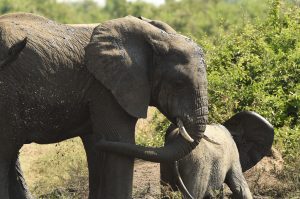
The area of Semuliki National Park is a distinct ecosystem within the larger Albertine Rift ecosystem. The park is located at the junction of several climatic and ecological zones, and as a result has a high diversity of plant and animal species and many microhabitats. Most of the plant and animal species in the park are also found in the Congo basin forests, with many of these species reaching the eastern limit of their range in Semuliki National Park. The park has more than 400 bird species which makes the park a good birding destination. Some of these birds include; Little Grey Greenbul, Toro Olive Greenbul, Mountain Greenbul, Yellow-throated Nicator, Western Nicator, Purple-throated Cuckoo-shrike, Petit’s Cuckoo-shrike, Black Saw-wing, Eurasian Oystercatcher, Long-tailed Hawk, Red-thighed Sparrowhawk, Chestnut-flanked Goshawk, Grant’s Bluebill, Afep Pigeon, Blue-headed Coucal among many more. The park provides habitat for over 60 mammal species, including African Buffalo, Leopard, Hippopotamus, Mona Monkey, Bush Babies, African Civet, African Elephant, and Pygmy scaly-tailed flying squirrel. Nine duiker species are found in the park, including the bay duiker. The park has 8 primate species some of which include: Grey-cheeked Mangabey, Vervet, Red-tailed monkeys, Olive Baboon and Guereza Colobus, De Brazza’s Monkeys are rare and the Chimpanzees and almost 460 butterfly species.
The locals living in Semiliki area are majorly the Bakonjo and Bamba people. There are also the Batuku who are pastoralists who graze their cows along the banks of the Semuliki river and the Batwa (pygmies). The Batwa are the indigenous people of the area and used to live in the park before it was gazetted as a national park. They were mostly hunters and fruit gatherers. Community walk to the Batwa villages is one exciting activity done while visiting the park.
With all the above attractions, there are several activities one can do while in the park. They include; game drives where you expect to spot some of the wildlife living in the park, visiting the hot springs, hiking and nature walks around the park, community visits to the Bambuti villages who have interesting culture that you can learn about, birding (the park offers great opportunities to spot various species including the Albertine rift endemics) and chimpanzee trekking though the habituation process is still going on.
Getting there
The park is situated in Bundibugyo about 59 km from Fortportal which takes between 2 and 3 hours on the bumpy road to reach the Sempaya Gate. The easiest route to get to Semuliki National Park from Kampala is; Kampala-Fortportal via Mubende, this route is approximately 5-6hour drive about 180km, this makes it a shorter route. Usually a 4×4 safari land cruiser is recommended.